

Introduction
If you’ve ever played or even just watched a Saran Wrap Ball Game, you already know how ridiculously fun and chaotic it can get. It’s one of those party games that seems almost too simple, yet it has everyone screaming, laughing, grabbing, and scrambling as if the stakes were sky-high. But ask anyone who has actually made one of these notorious plastic-wrapped monsters, and they’ll tell you something important: the amount of Saran wrap you use can make or break the entire game. Too little wrap and the ball falls apart in a few passes. Too much and players are peeling plastic for ages while the fun drains out like air from a slow balloon. So striking that perfect balance matters more than most people realize.
Another reason why the amount of wrap matters is the pacing of the game. You want the ball to last long enough so every player gets a turn but not so long that the excitement fades or younger players lose interest. It’s kind of like cooking pasta: underdo it and it’s disappointing, overdo it and it turns mushy. The Saran wrap ball is the same way except instead of noodles, you have prizes, candy, cash, lottery tickets, mini gadgets, and whatever random items you toss inside. All of that needs just the right coverage to create suspense, unpredictability, and that satisfying feeling of unwrapping something mysterious layer after layer.
On top of that, different parties need different-sized wrap balls. A small family night requires way less plastic than a holiday party with 20 guests. And if you’re playing with competitive adults instead of kids, you’ll want to increase the wrapping difficulty so the ball doesn’t unravel too quickly. Basically, the amount of wrap determines the speed, the challenge, and the overall energy of the game. That’s why the first step in planning this activity isn’t buying prizes at the dollar store it’s figuring out exactly how much Saran wrap you need.
In this guide, we’re breaking down everything: group sizes, roll sizes, wrap types, prize layering, difficulty levels, building strategy, budgeting, and more so you can create the perfect Saran wrap ball every single time.
Understanding the Purpose of the Saran Wrap Ball Game
When people first hear about the Saran Wrap Ball Game, they assume it’s just a silly holiday activity — something fast, chaotic, and mostly for laughs. But the truth is, this game has a very intentional purpose behind the madness. At its core, it blends suspense, competition, teamwork, and surprise all into one swirling, crinkly, unpredictable ball. Understanding the purpose helps you build a better ball, set the right difficulty, and choose how much wrap you need.
The main idea is simple: unwrap layers of plastic to reveal hidden prizes, all while racing against a timer as the player next to you tries to roll doubles with dice. But what makes this game special is the emotional rollercoaster it creates. Every layer promises something new maybe candy, maybe cash, maybe a gag gift and that anticipation is what keeps players engaged from start to finish. The wrap isn’t just packaging; it’s the tension builder, the obstacle, the glue that holds the experience together.
The amount of Saran wrap you use directly affects the excitement. Too little wrap makes the ball fall apart so quickly that the game ends before the laughter even heats up. Too much wrap turns it into a frustrating chore where players peel and fight through plastic for minutes without any payoff. The perfect middle ground keeps things challenging but still fun, giving every participant a fair shot at winning something.
Another purpose is simple bonding. This game works for families, friends, workplaces, youth groups basically anyone who likes a little chaos mixed with a lot of laughter. Kids stay entertained because they love surprises. Adults get competitive because they love winning. The game bridges age gaps effortlessly, making it one of the easiest go-to party activities for groups of all sizes.
When you know the purpose behind the game suspense, fairness, fun, and pacing it becomes way easier to judge how much Saran wrap you truly need. It’s not about building the biggest ball possible; it’s about building the right one for your players.
Factors That Determine How Much Saran Wrap You Need
When planning a Saran Wrap Ball Game, the biggest mistake people make is assuming there’s a universal amount of wrap that works for every situation. In reality, the amount of Saran wrap you need depends heavily on several key factors—things like how many people are playing, how competitive they are, what kinds of prizes you’re using, and even the age range of your group. All these details matter because they change the pacing, difficulty, and overall feel of the game. Understanding these factors helps you create a ball that’s perfectly sized, perfectly challenging, and perfectly fun.
One of the biggest considerations is the number of players. Smaller groups don’t need giant Saran wrap balls; otherwise, you’ll end up with a game that lasts way too long. On the other hand, larger groups need way more wrap to ensure that everyone gets a turn. A big holiday party with 20 people requires more layers, more wrap, and more prizes to keep the game flowing. If the ball runs out early, you’re left with disappointed players and a sudden drop in energy.
Another major factor is player age. Kids unwrap differently from adults: they’re usually slower, less coordinated, and more easily distracted. With kids, you want a ball that’s easier to unravel so they get quicker wins and stay excited. Adults, though? They get competitive. They dig, rip, twist, and shred through the plastic like their life depends on it. That means you can use more wrap, thicker layers, and trickier techniques to increase the challenge.
Difficulty level also plays a role. Some hosts like fast, frantic games. Others want slow-burn suspense with layers that take time to peel through. If you want a higher difficulty, you’ll use more wrap and tighter layering. If you want a simple, family-friendly version, you’ll go lighter.
Then there’s the size and quantity of prizes. Mini prizes require more layering to keep them secure. Larger items add bulk and stretch the wrap, requiring additional layers to maintain the round shape.
Each of these factors influences how much wrap you should use, and when combined, they help you create a perfectly balanced game experience.
Recommended Amount of Saran Wrap by Group Size
One of the most reliable ways to determine how much Saran wrap you need is by looking at the size of your group. This single factor affects pacing, difficulty, and how long the game lasts more than anything else. The goal is to create a ball that lasts long enough so everyone gets a turn, but not so long that the game drags on forever. The balance is somewhere in the middle , and group size is what helps you find that sweet spot. That’s why breaking things down by small, medium, and large groups makes planning a whole lot easier.
For small groups of 2=5 players, you don’t need a gigantic ball. In fact, using too much wrap can actually kill the fun because the game will last far longer than the number of players can sustain. A good guideline for small groups is 200–300 feet of Saran wrap, which is usually about one standard roll and maybe part of a second. This amount makes a decent-sized ball with enough layers to hide around 15=20 small prizes without overwhelming anyone. The pace stays lively, and each player gets multiple turns, which keeps the energy high. f
or medium groups of 6=10 players, you’ll need more wrap to ensure the ball doesn’t run out too soon. This size group is the most common for families, holiday parties, and small gatherings. Here, you’ll want anywhere from 400–600 feet of wrap, which comes out to roughly two regular rolls or one large commercial roll. This ensures enough layers to allow every person to take a turn or two. With medium groups, you also have more room to include bigger prizes and more varied items without affecting the structure of the ball. It also gives you wiggle room to adjust difficulty by adding extra layers in certain areas.
For large groups of 11=20+ players, you’re working at a different level. Big groups move fast, and the ball needs to be built for endurance. For these events, plan on using 700–1,000+ feet of wrap, which could be two or three full rolls. Large groups need thicker layers not just to prolong the game but to create a steady rhythm. With more people watching and waiting, the suspense becomes part of the entertainment. A large wrap ball becomes a centerpiece — not just an activity, but a shared spectacle.
Types of Plastic Wrap to Use
When it comes to building a Saran wrap ball that’s sturdy, exciting to unwrap, and fun for all ages, the type of plastic wrap you choose matters more than most people realize. Not all plastic wraps behave the same. Some cling tightly, some stretch more, some tear easily, and some feel almost impossible to break through. The texture, thickness, and stickiness of the wrap all play a role in determining how difficult or easy your ball will be to unwrap and that directly impacts how much wrap you’ll use and how the game unfolds. So choosing the right wrap is one of the smartest decisions you can make before you even start building.
The most common option is standard kitchen-grade plastic wrap. This is the kind you find in almost every home, usually in a 200–300 ft box. It’s affordable, easy to find, and clings well enough to hold the ball together. Standard wrap is perfect for small to medium groups or for family-friendly games where you want a moderate level of difficulty. It molds around prizes cleanly and allows you to shape the ball without much effort. The downside? It tears fairly easily
which is good for kids, but not ideal if you’re aiming for a harder,more intense unwrapping experience.
Then there’s professional-grade wrap, often sold in restaurants, delis, or bulk stores like Sam’s Club or Costco. This wrap is thicker, stronger, and much more durable than your typical kitchen roll. If you’re hosting a large group or you want the game to last longer, professional wrap is a smart choice. Its heavy-duty strength makes unwrapping more challenging and adds weight to the ball, which increases the suspense and the workout. It also clings more aggressively, making each layer feel like a puzzle to peel through. Just know: it’s harder for young kids to handle, so consider your audience.
Another key difference is stretch-tight vs. cling wrap. Stretch-tight wrap is tougher and more resistant to tearing. Cling wrap is softer, stickier, and easier to pull apart. If you want layers that seal tightly around prizes, cling wrap works great. If you want tougher layers that frustrate competitive adults (in a fun way), stretch-tight wrap wins every time.
Choosing the right wrap isn’t just about quality it’s about matching the wrap to your group, your prizes, and the gameplay style you want. Get this part right, and you’re already halfway to building an unforgettable Saran wrap ball.
How Many Rolls Should You Buy?
Figuring out how many rolls of Saran wrap you need can feel confusing at first, especially because rolls come in different lengths, thicknesses, and levels of cling. But once you understand how the footage on the box translates into actual wrapping power, choosing the right number of rolls becomes surprisingly simple. Most people either buy too little wrap and end up with a tiny ball, or they buy way too much and end up creating a plastic-wrapped planet that takes an hour to unwrap. The goal here is to help you find the perfect balance enough wrap to make the game fun and challenging, without wasting money or turning the ball into an untamable monster.
The first thing to know is that roll size varies heavily by brand. Standard kitchen rolls usually range from 200 to 300 feet, while commercial or restaurant-grade rolls can run anywhere from 500 to 3,000 feet. That’s a huge difference! A typical home roll is great for smaller groups or lighter games, but if you’re hosting a big holiday gathering, buying a commercial roll is almost always more cost-effective. Instead of juggling four or five smaller rolls, one large box gets you all the footage you need plus sturdier wrap that builds stronger layers.
For most small and medium games, you’ll need 1 to 2 standard rolls. A single 200–300 ft roll makes a decent-sized ball for four or five players, especially if your prizes are mostly small. If you’re planning something more elaborate, two rolls will give you the flexibility to add extra layers around special prizes, reinforce weak spots, or increase the difficulty with thicker wrapping. For medium groups of six to ten people, two standard rolls or one 500 ft commercial roll is the sweet spot.
For larger groups, commercial rolls are the way to go. A 1,000 ft roll can create a massive, dense ball that keeps 15=20 players engaged, and it’s usually cheaper per foot than buying multiple kitchen rolls. You also get better control because commercial wrap tears less easily, helping you build more structured layers. If you’re going all out big party, lots of prizes, competitive adults you might even use 1,500 ft or more.
Your ideal number of rolls depends on footage, group size, and how intense you want the game to be. Once you know those details, buying the right amount becomes effortless.
How to Layer Prizes Inside the Ball
Layering prizes inside a Saran wrap ball is where the real magic happens. Anyone can wrap random items inside plastic, but creating a ball that feels exciting, unpredictable, and satisfying to unwrap requires intention. The way you place the prizes their size, spacing, and position determines how the game flows. A well-layered ball keeps players engaged because every few seconds, something new falls out. A poorly layered ball feels sloppy, predictable, or unbalanced. So, learning how to layer prizes correctly is one of the most important skills in building the perfect Saran wrap ball.
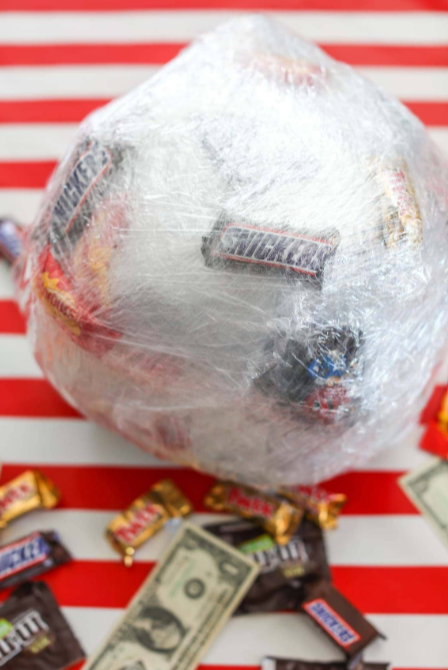
The process starts at the core. Every Saran wrap ball begins with a central item, usually something small but valuable like cash, a mini toy, a keychain, a chocolate bar, or a gift card. This core needs to be wrapped tightly so it forms a solid center. The first few layers matter the most because they create the base shape of the ball. Wrap these layers firmly, using several rotations of plastic to create a dense starting point. This also ensures that the core prize won’t poke through or distort the ball later.
Once your core is set, you can start adding small prizes. These usually include candies, small toys, lip balms, trinkets, coins, mini sanitizers, or other dollar-store finds. Small prizes fill gaps easily and help build evenly distributed layers. The trick is to place one prize, then wrap it several times, then add another, repeating the pattern so the ball grows evenly in all directions. Avoid stacking multiple prizes in one spot, or the ball may become lopsided and harder to wrap smoothly.
As your ball grows, begin adding medium to larger items. These items create fun surprises but can also deform the ball if not wrapped correctly. The key is to place larger prizes early enough that the ball is still small and easy to shape. If you wait until later and add them near the surface, they’ll bulge out and make wrapping tricky. Use extra layers of plastic around large items to pull them tightly into the ball’s shape.
One of the best layering techniques is alternating difficulty. Wrap some sections more tightly so players struggle, then create easier sections so the pace speeds up. This mix keeps the experience unpredictable. Also consider adding “special” layers like reverse wrap, where you wrap backward so the plastic doesn’t stick to create even more chaotic fun.
Layering isn’t just stuffing items randomly; it’s a careful balance of placement, tension, and rhythm. A well-layered ball becomes a thrilling mystery with every pull.